Huiming Dong1,2, Rizwan Ahmad2, and Arunark Kolipaka1,2
1Department of Radiology, The Ohio State University Wexner Medical Center, Columbus, OH, United States, 2Department of Biomedical Engineering, The Ohio State University, Columbus, OH, United States
1Department of Radiology, The Ohio State University Wexner Medical Center, Columbus, OH, United States, 2Department of Biomedical Engineering, The Ohio State University, Columbus, OH, United States
A compressed-sensing-based inversion is proposed
to estimate lung stiffness. Result demonstrated that the technique yielded more
robust stiffness estimates in noisy data compared to direct inversion, and
successfully detected higher stiffness at total lung capacity than residual
volume.
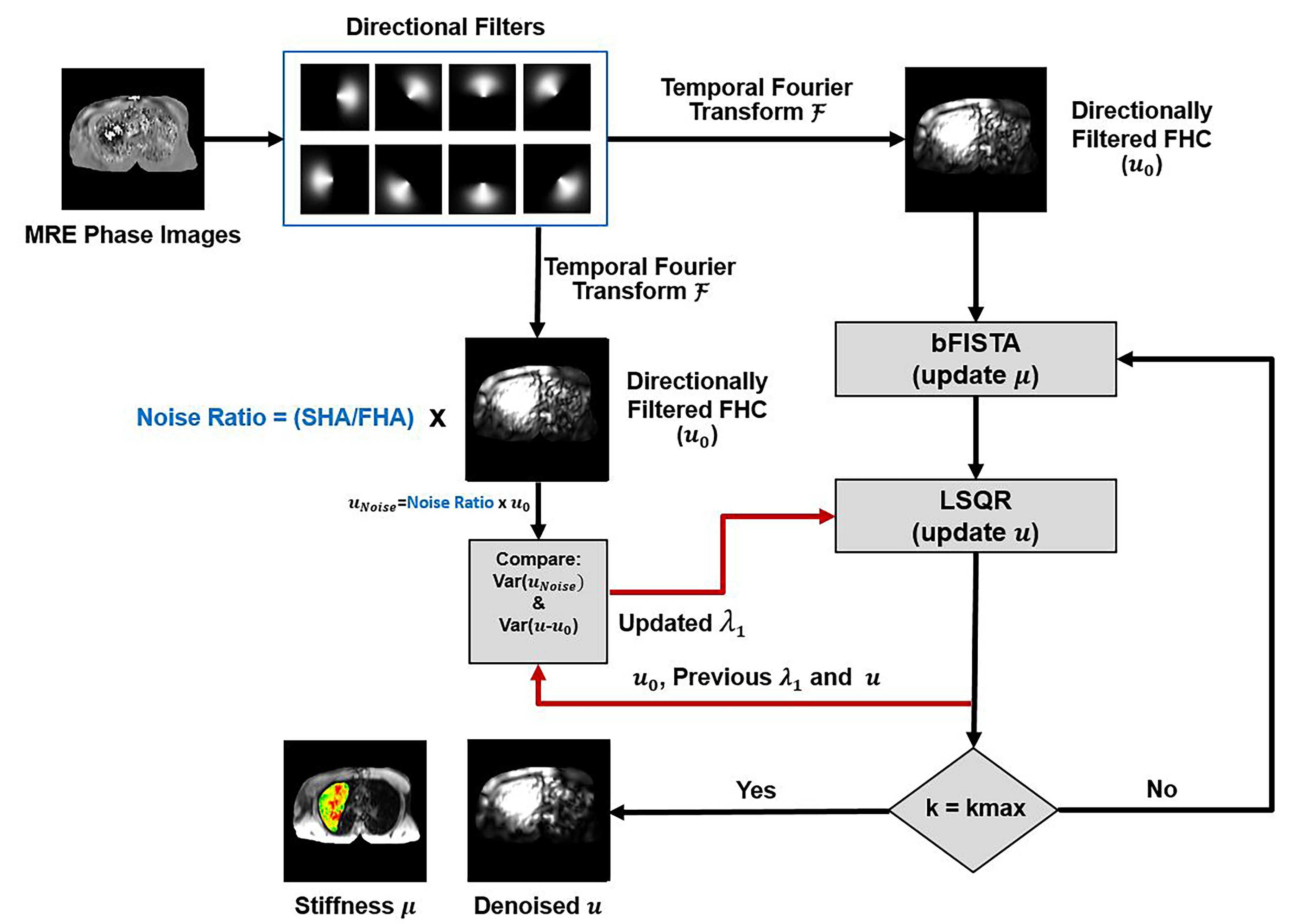
Figure 1.
Flow Diagram. The
acquired data are first unwrapped and filtered to obtain displacement u0 for each direction. Subsequently, the cost function is alternatively optimized. λ1 is controlled by a noise feedback loop
(in red), allowing denoising for each direction via comparing the variance
of uNoise and u-u0. Noise ratio is second harmonic amplitude (SHA)/first harmonic amplitude
(FHA) of the non-filtered data.
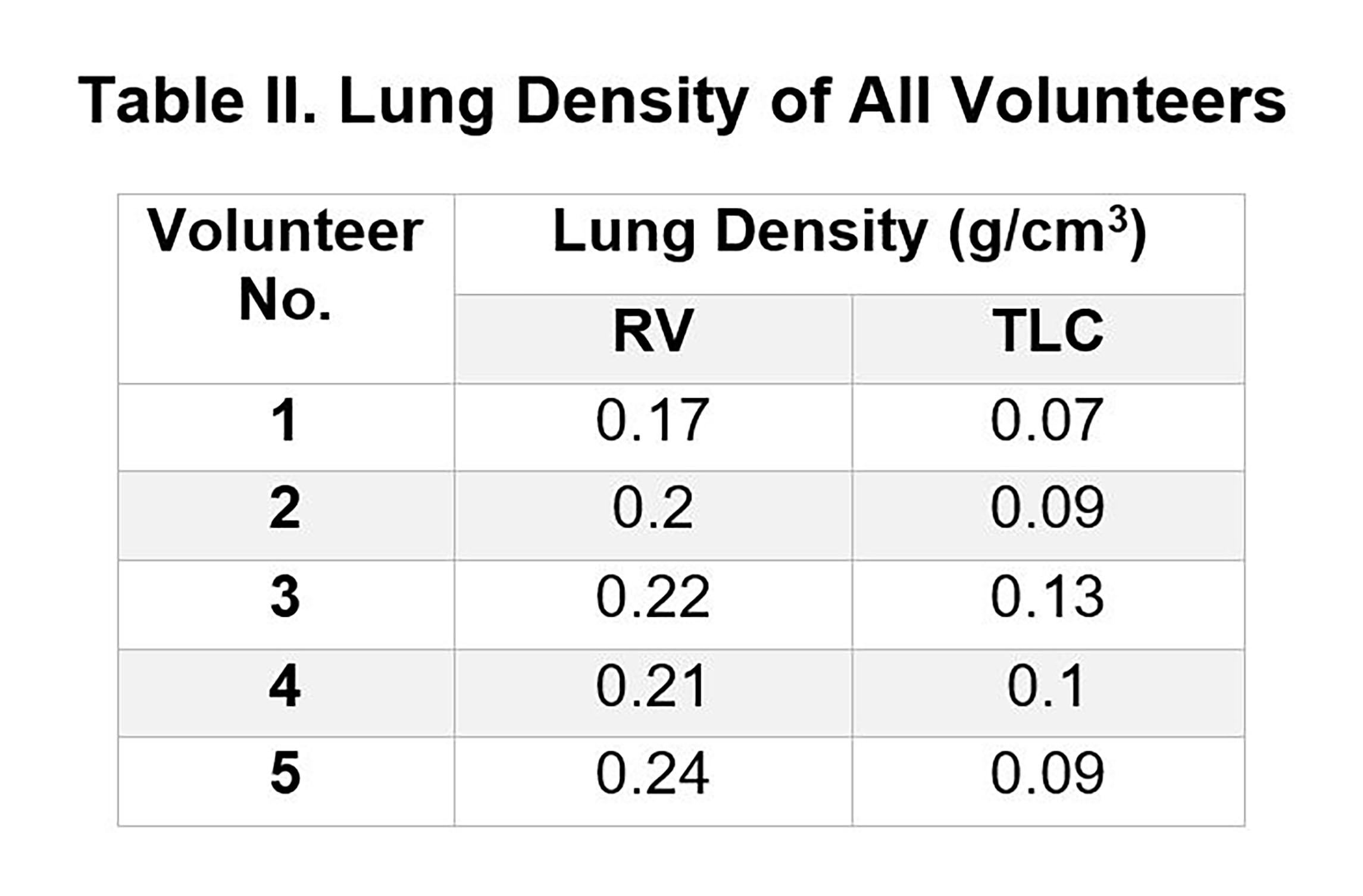
Table II. Lung Density of All Volunteers.