Simon Daniel Robinson1,2,3, Korbinian Eckstein1, Siegfried Trattnig1, Karin Shmueli4, and Barbara Dymerska4
1Department of Biomedical Imaging and Image-guided Therapy, Medical University of Vienna, Vienna, Austria, 2Department of Neurology, Medical University of Graz, Graz, Austria, 3Centre for Advanced Imaging, University of Queensland, Queensland, Australia, 4University College London, London, United Kingdom
1Department of Biomedical Imaging and Image-guided Therapy, Medical University of Vienna, Vienna, Austria, 2Department of Neurology, Medical University of Graz, Graz, Austria, 3Centre for Advanced Imaging, University of Queensland, Queensland, Australia, 4University College London, London, United Kingdom
We
present a phase unwrapping algorithm (ROMEO), which uses improved unwrapping
paths and a minimum spanning tree algorithm. Overall, in tests with simulated and
in vivo 3D-GRE and EPI 7T data, ROMEO was faster and more accurate than PRELUDE
and Best Path.
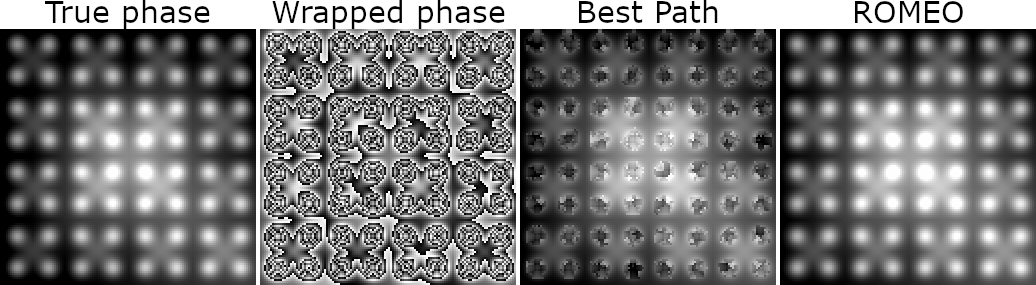
Fig.1: A comparison of the performance of PRELUDE, Best Path and ROMEO in unwrapping a complex (simulated) topography. PRELUDE did not complete in 13 days. Unwrapping errors are present in the Best Path results. ROMEO unwrapped the phase without errors, illustrating the effectiveness of the modified weights in steering the unwrapping on improved paths through the object.
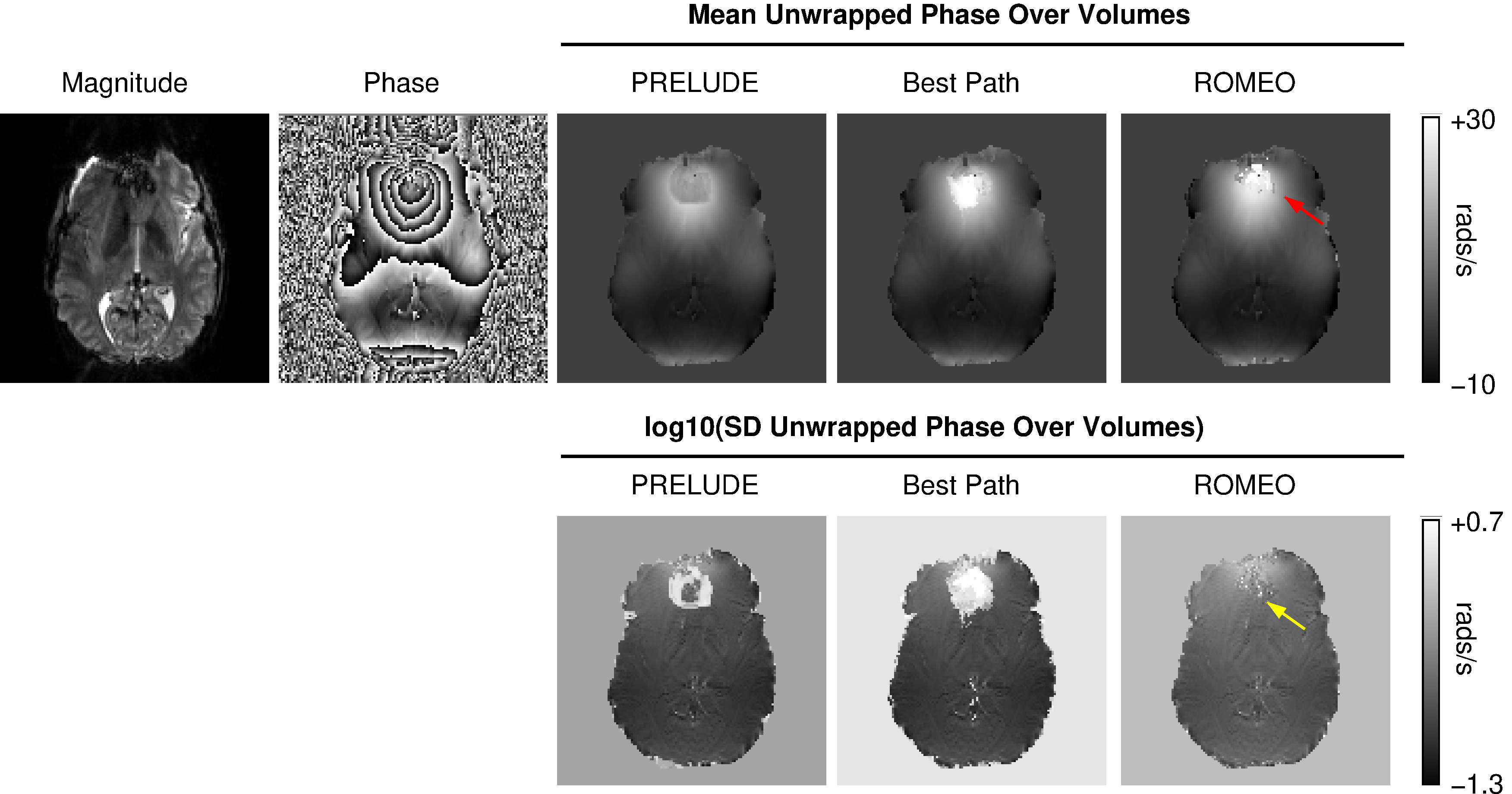
Fig.3: A comparison of the performance of PRELUDE, Best Path and
ROMEO in unwrapping time-series EPI data acquired at 7T from a patient with a
brain tumour. Unwrapping errors were distributed over a much larger frontal
region in PRELUDE and Best Path than in ROMEO (top row, red arrow). ROMEO results were also more stable over volumes, with only a few
isolated voxels in frontal regions having high standard deviation over time, indicative
of unwrapping errors (yellow arrow).