Malte Steinhoff1, Itamar Ronen2, Andrew Webb2, Alfred Mertins1, and Peter Börnert2,3
1Institute for Signal Processing, University of Luebeck, Luebeck, Germany, 2Department of Radiology, LUMC, Leiden, Netherlands, 3Philips Research Europe, Hamburg, Germany
1Institute for Signal Processing, University of Luebeck, Luebeck, Germany, 2Department of Radiology, LUMC, Leiden, Netherlands, 3Philips Research Europe, Hamburg, Germany
· Self-navigated multi-shot DWI reconstruction algorithms can correct for shot-specific rigid in-plane motion and corrupted outliers.
· In this way navigator-free, efficient DWI acquisition schemes become possible at 7T.
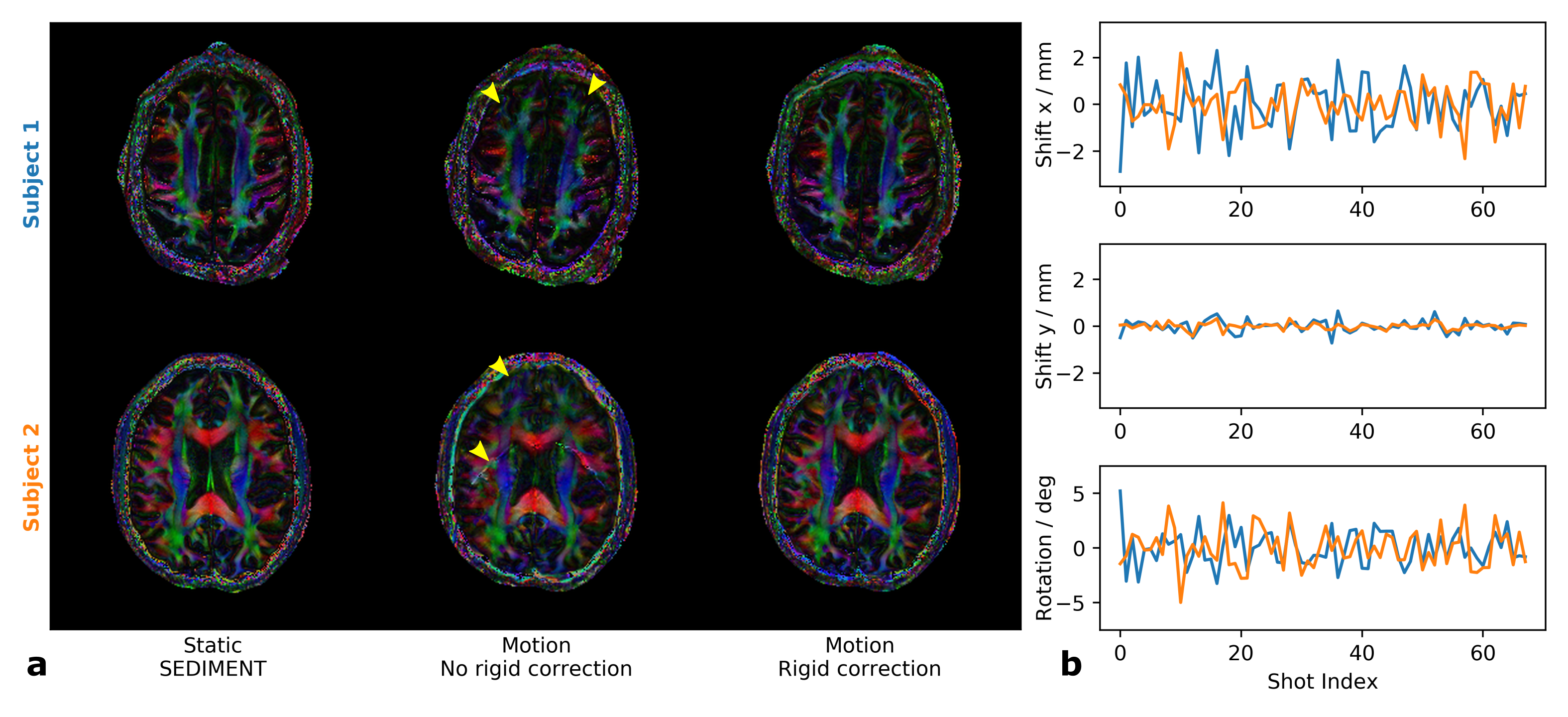
Figure 4: Colored FA maps and rigid parameters of 4-shot
15-direction DTI datasets recovered by SEDIMENT. a: Maps of two subjects acquired statically without
(left column) and dynamically with voluntary in-plane motion (center and right
column). b: Rigid parameters throughout multi-shot DTI experiment (shot index
is a surrogate for time). The severe misalignment artifacts (arrows) are
effectively mitigated by rigidly corrected SEDIMENT. Note the slight
through-plane motion between the datasets for subject 2.
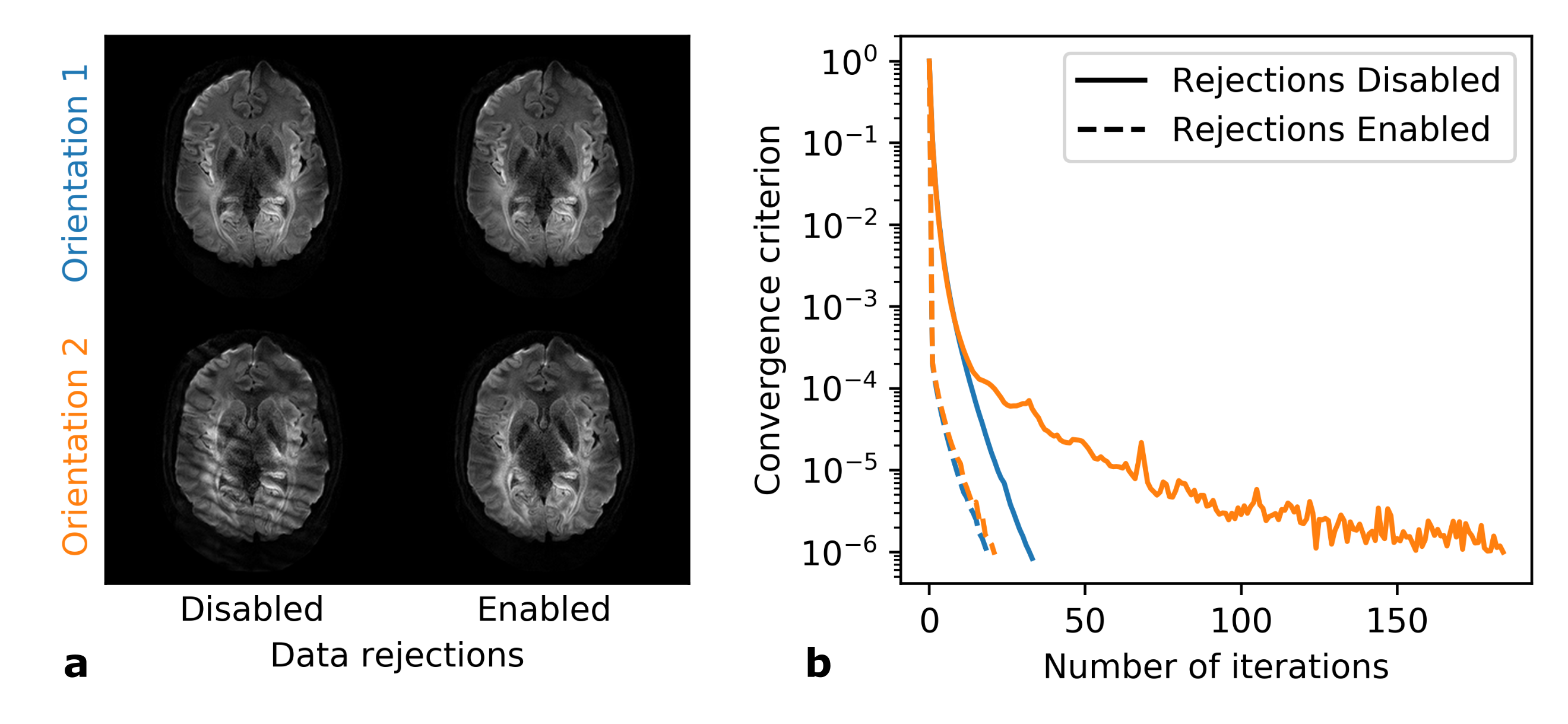
Figure 3: Shot rejection for 4-shot 15-direction DTI
reconstructed by SEDIMENT. a:
Multi-shot images for two diffusion orientations (rows) with and without
rejections (columns). b: Convergence. The images for orientation 1 are similar,
whereby faster convergence is achieved by temporal shot rejection during
initial iterations. Orientation 2 shows wave artifacts from motion corrupted
diffusion encoding. The additional k-space offset shot rejection recovers
image quality and solves the convergence issues.