Xinzeng Wang1, Ersin Bayram1, Daniel Litwiller2, Tetsuya Wakayama3, Alan B McMillan4, Lloyd Estowski5, Ty A Cashen5, and Ali Pirasteh4
1Global MR Applications & Workflow, GE Healthcare, Houston, TX, United States, 2Global MR Applications & Workflow, GE Healthcare, New York, NY, United States, 3Global MR Applications & Workflow, GE Healthcare, Hino, Japan, 4Radiology, University of Wisconsin Madison, Madison, WI, United States, 5Global MR Applications & Workflow, GE Healthcare, Waukesha, WI, United States
1Global MR Applications & Workflow, GE Healthcare, Houston, TX, United States, 2Global MR Applications & Workflow, GE Healthcare, New York, NY, United States, 3Global MR Applications & Workflow, GE Healthcare, Hino, Japan, 4Radiology, University of Wisconsin Madison, Madison, WI, United States, 5Global MR Applications & Workflow, GE Healthcare, Waukesha, WI, United States
A PROPELLER-DWI sequence with deep-learning
reconstruction can ameliorate the common artifacts associated with the
conventional EP-DWI, without significant SNR penalty. Lesion detectability will
be further investigated.
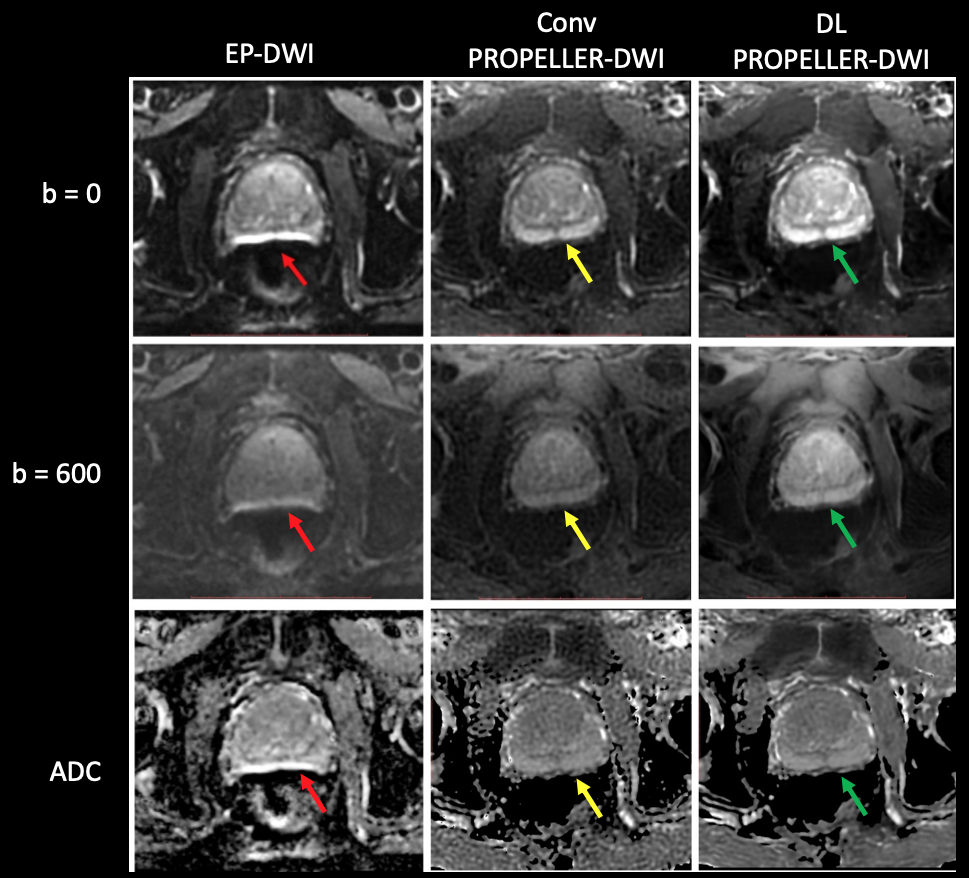
Figure 2 – EP-DWI images of the prostate in a healthy
volunteer demonstrating significant artifactual signal hyperintensity in the
peripheral zone due to rectal gas (red arrows). Conv-PROPELLER-DWI provides
diagnostic images of the entire prostate and the peripheral zone, however with
a subjectively low SNR. DL-PROPELLER-DWI ameliorated both the artifact seen on
EP-DWI and the low SNR on Conv-PROPELLER-DWI (green arrows), generating the
most favorable image quality.
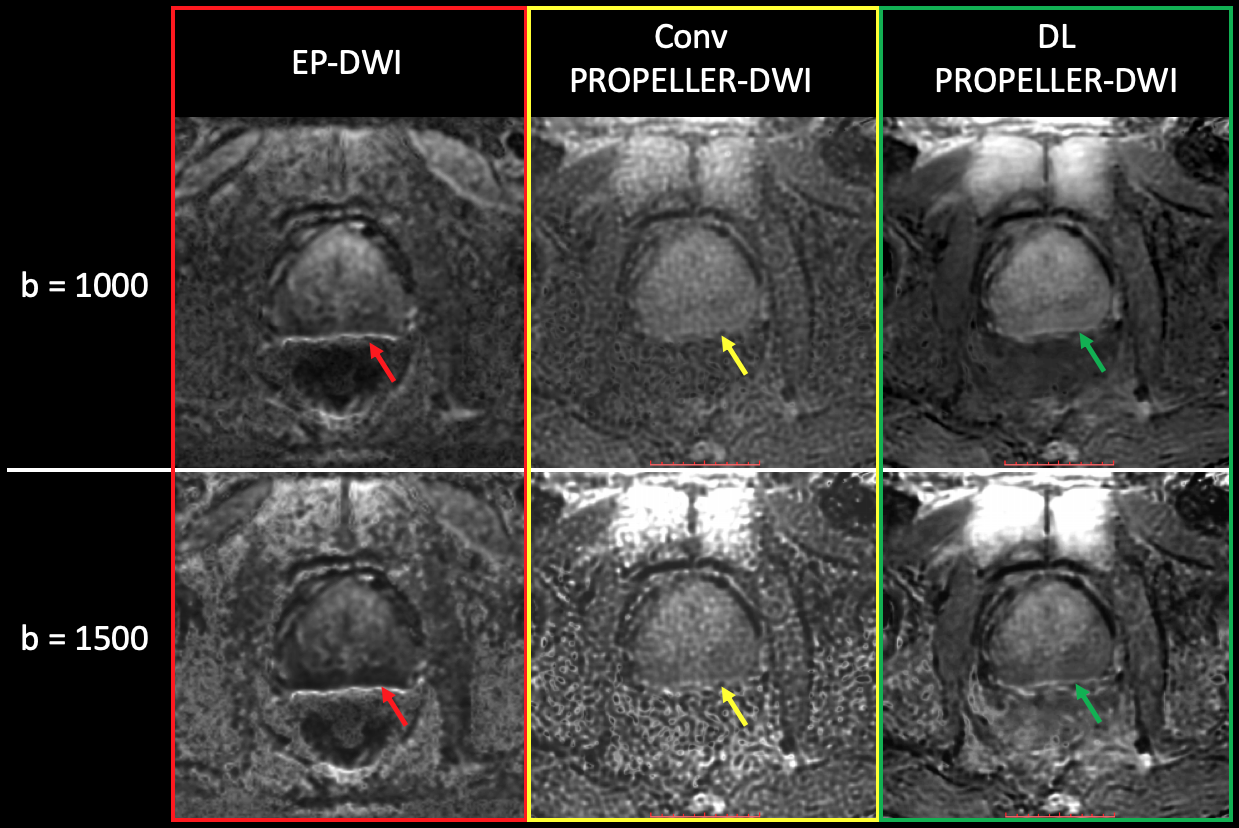
Figure 4 - Synthetic images at b = 1000 and 1500 s/mm2;
EP-DWI suffered from artifact in the peripheral zone as demonstrated by
artifactual hypointensity (red arrows), rendering the images essentially
non-diagnostic, while Conv-PROPELLER-DWI addressed the artifact, however with
reduced SNR (yellow arrows). DL-PROPELLER-DWI was able to ameliorate both the
artifact and the SNR challenge (green arrows), producing overall the most
favorable image quality.