Digital Poster
Registered Abstracts I: New to ISMRM!
ISMRM & ISMRT Annual Meeting & Exhibition • 10-15 May 2025 • Honolulu, Hawai'i

Digital Poster
Registered Abstracts I: New to ISMRM!
 |
Computer Number: 145
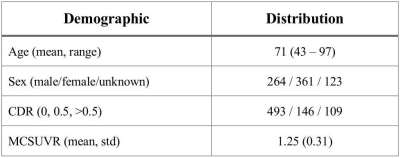
3328. Assessing
the clinical relevance of amyloid PET prediction from T1w MRI
for Alzheimer’s disease
L. Baron, R. Callaghan, D. Cash, P. Weston, H. Azadbakht, H.
Zhang
University College London, London, United Kingdom
Impact: Our findings could clarify the clinically
relevant performance of existing amyloid PET synthesis
techniques for Alzheimer’s disease.
|
|
|
Computer Number: 146
3329. Differential
Diagnosis of Dementia Subtypes with Fixel-Based Analysis:
Insights From Real-World Diffusion MRI
T. Schmidt, T. Rittman
University of Cambridge, Cambridge, United Kingdom
Impact: A translational study providing convincing
evidence of the feasibility and diagnostic usefulness of
advanced MRI modalities in clinics could contribute to a
shift in clinical practice and a tangible improvement for
patients in the form of more accurate early diagnosis.
|
||
 |
Computer Number: 147
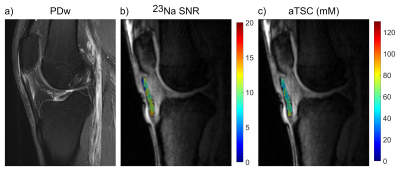
3330. 23Na
MRI of the patellar tendon: A comparison between healthy
volunteers and patients with tendinopathy at 3T.
B. Kamp, R. Möller, P. Gallinnis, A. Nagel, H-J Wittsack, A.
Müller-Lutz, L. Wilms
Medical Faculty and University Hospital Düsseldorf, Heinrich-Heine-University Düsseldorf, Düsseldorf, Germany
Impact: The diagnostic potential of 23Na
MRI for musculoskeletal pathologies is further investigated
by measuring 23Na
MRI specific parameters in the patellar tendon, which
provide information about changes in the biochemical
composition of the tendon.
|
|
 |
Computer Number: 148
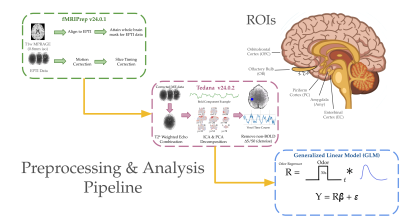
3331. Olfactory
Tract BOLD fMRI using Echo Planar Time Resolved Imaging
K. Lamar, F. Wang, Z. Dong, C. Murphy, A. Jacobson, R.
Barnes, C. Chen, A. Hsiao, T. Liu
University of California, San Diego, La Jolla, United States
Impact: Olfactory dysfunction is an early indicator of
neurodegenerative diseases, such as Alzheimer’s disease and
Parkinson’s disease.1-4 In
this work, we utilize an acquisition technique designed to
minimize fMRI artifacts to accurately assess olfactory
function potentially allowing for earlier diagnosis.
|
|
 |
Computer Number: 149
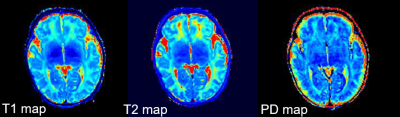
3332. Evaluation
of pediatric global developmental delay using synthetic MR
imaging
X. Wang, J. Wu, L. Xu, Q. Wu, J. Jiang, Y. Zhang, Y. Yu
The First Affiliated Hospital of Anhui Medical University, Hefei, China
Impact: Some children may progress to normal functioning
with early detection and appropriate supportive treatment.
|
|
 |
Computer Number: 150
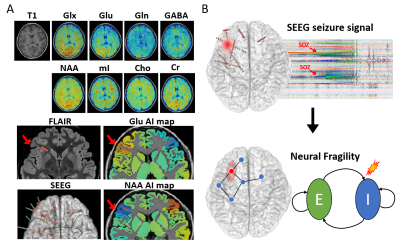
3333. Mapping
Glutamate and Neural Fragility in Drug Refractory Pediatric
Epilepsy using Ultrafast High Resolution MRSI
B. Cai, H. Zhang, Y. Zhao, Y. Li, W. Jin, J. Li, F. Han, L.
Liu, G. Wang, X. Ye, J. Luo, Z. Liang
School of Biomedical Engineering, Shanghai Jiao Tong University, Shanghai, China
Impact: This study will unveil the underlying molecular
mechanism behind neural fragility, the SEEG marker of E/I
imbalance. Identification of non-invasive brain imaging
markers of neural fragility could potentially enhance
epilepsy diagnosis and presurgical planning.
|
|
|
Computer Number: 151
3334. Effect
of Genotype on Myocardial Strain in Phenotype-Negative
Individuals at Genetic Risk for Arrhythmogenic Cardiomyopathy
E. Carruth, C. Nevius, K. Kallur, C. Haggerty
Geisinger, Danville, United States
Impact: The results of this study will help inform
patients and providers in the management of genomic
screening-identified genetic risk for arrhythmogenic
cardiomyopathy by identifying potential biomarkers of
nascent disease development, which may prompt early
intervention to reduce mortality.
|
||
 |
Computer Number: 152
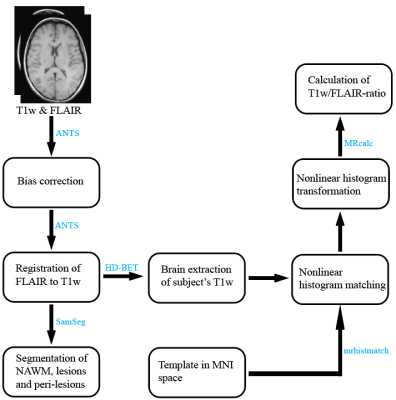
3335. Assessing
myelin changes in lesional and non-lesional white matter in
patients with MS using the T1w/FLAIR-ratio: a longitudinal study
L. van den Boogaard, G. Drenthen, S. Monachino, S.
Knippenberg, S. Zinger, C. Fernandes, M. Breeuwer, S.
Jolani, J. Jansen, O. Gerlach
Maastricht University Medical Center+, Maastricht, Netherlands
Impact: The T1w/FLAIR-ratio can potentially be a
valuable metric to evaluate white matter changes in the
myelin content. This study will investigate whether this
myelin-proxy can provide estimates that can help predict
progression of clinical symptoms in RRMS.
|
|
 |
Computer Number: 153
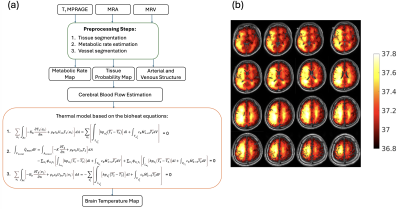
3336. Systematic
evaluation of the effects of cerebral blood flow and metabolism
on local brain temperature for applications in stroke prognosis
B. Hu, D. Sung, J. Allen, F. Nahab, A. Fedorov, C. Fleischer
Georgia Institute of Technology and Emory University, Atlanta, United States
Impact: Brain temperature is a promising marker for
prognostication of chronic and acute ischemia. We
hypothesize local temperature increases will be positively
correlated with degree of stenosis and occlusion, accounting
for collateral flow and metabolism.
|
|
 |
Computer Number: 154
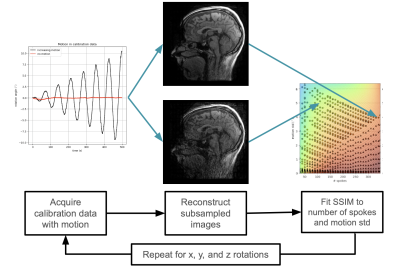
3337. Verifying
retrospective spoke rejection as a way to use prospective motion
correction with 3D stack-of-stars GRE
S. Schauman, A. van Niekerk, H. Rydén, O. Norbeck, E.
Avventi, T. Sprenger, S. Skare
Karolinska Institutet, Stockholm, Sweden
Impact: This validation study will show whether
retrospective spoke rejection in combination with
prospective motion correction and radial sampling can
improve image quality consistently under realistic motion
conditions.
|
|
 |
Computer Number: 155
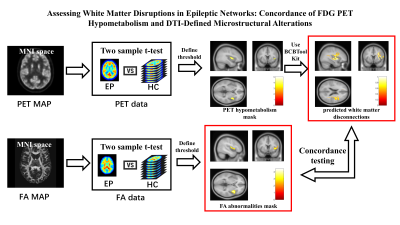
3338. Assessing
White Matter Disruptions in Epileptic Networks: Concordance of
FDG PET Hypometabolism and DTI-Defined Microstructural
Alterations
Q. Dai, H. Huang, J. Li, H. Zhang, Y. Cui, S. Yuan, H. Qi,
M. Zhang, J. Luo
Shanghai Jiao Tong University, Shanghai, China
Impact: The results may enhance understanding of the
relationship between metabolic dysfunction and structural
abnormalities in epilepsy, potentially guiding clinicians
toward more tailored treatment strategies. It may also
inspire further inquiries into the underlying mechanisms of
drug resistance.
|
|
 |
Computer Number: 156
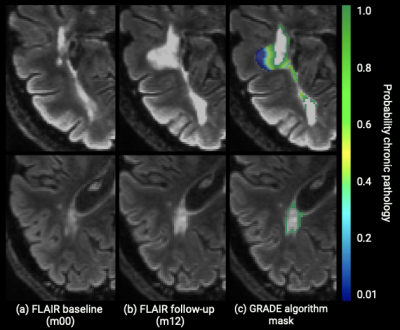
3339. Accurate
quantification of chronic lesion expansion in MS: Introducing
the GRADE algorithm
M. Alting, S. Klistorner, B. Zin, D. Wang, H. Beadnall, A.
Klistorner, M. Barnett, C. Wang
University of Sydney, Sydney, Australia
Impact: Despite its signification role in MS
progression, accurate quantification of chronic lesion
expansion has remained elusive. This newly designed GRADE
algorithm will be validated for routine clinical
quantification of chronic expansion, potentially
revolutionizing patient monitoring and development of
targeted therapies.
|
|
 |
Computer Number: 157
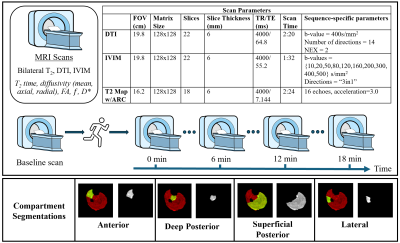
3340. Non-Invasive
Imaging Biomarkers for Exertional Compartment Syndrome
M. George, M. Barbieri, L. Hales, A. Pai, V. Mazzoli, M.
Fredericson, G. Gold, F. Kogan
Stanford University, Stanford, United States
Impact: This project addresses a clinical barrier
preventing diagnosis of exertional compartment syndrome. We
will demonstrate the potential for MRI as a non-invasive
diagnostic tool and explore its underlying mechanisms to
allow for informative treatment decisions and reduce
barriers to diagnosis
|
|
 |
Computer Number: 158
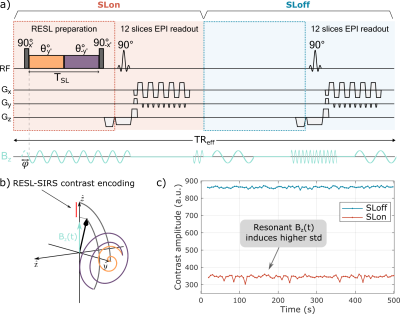
3341. Imaging
Epileptic activity with Spin-Lock fMRI: An exploratory study in
first-seizure patients
M. Capiglioni, B. Jin, R. Wiest
Institute for Diagnostic and Interventional Neuroradiology, University of Bern, Bern, Switzerland
Impact: This work validates a non-BOLD fMRI technique
targeting biomarkers of epilepsy, which could aid early
diagnosis and treatment strategies by detecting subtle
biomarkers of epileptogenic zones inaccessible to standard
EEG.
|
|
 |
Computer Number: 159
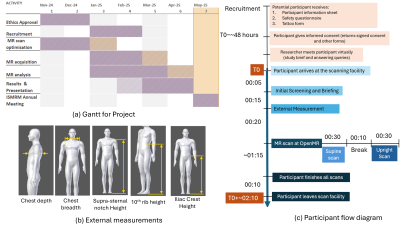
3342. Understanding
morphological and positional changes of torso organs due to
posture, breathing, and body size variation using Upright 0.5T
Open MR
R. Sobhan, O. Mougin, P. Glover, J. Breeze, P. Gowland, R.
Fryer
University of Nottingham, Nottingham, United Kingdom
Impact: Understanding
the changes in torso organ morphology and position using
upright and supine scans at Open MR could improve the fit,
form and anatomical coverage of personal protective
equipment and protect security and defence professionals
against ballistic and stab threats.
|
|
 |
Computer Number: 160
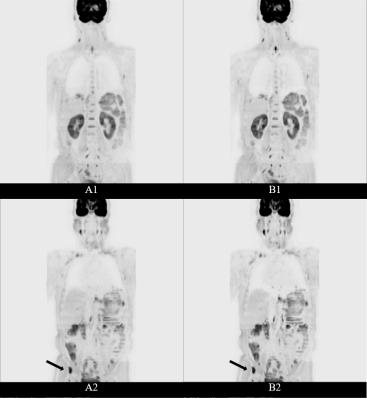
3343. Deep
Learning Reconstruction Enhances Whole-Body Diffusion-Weighted
Imaging Quality for Multiple Myeloma Detection: A Preliminary
Study
J. Shi, L. Wang, L. Shan, D. Fan, C. Hu
GE HealthCare, Shanghai, China
Impact: DLR holds the potential to improve WB-DWI
routine scanning by accelerating scan times while enhancing
image quality, thereby supporting more effective detection
and assessment of MM.
|
 Back to Meeting Home
 Back to the Program-at-a-Glance
The International Society for Magnetic Resonance in Medicine is accredited by the Accreditation Council for Continuing Medical Education to provide continuing medical education for physicians.
 View
Presentation Video
View
Presentation Video