What would happen if the people who cared for children and the people who built MRI technology worked more closely together?
That is at the heart of what makes the International Society for Magnetic Resonance in Medicine (ISMRM) such a special meeting for pediatric clinicians.
If you are a pediatrician, pediatric surgeon, pediatric radiologist, or another clinician using MRI in child health, ISMRM offers a unique opportunity to step beyond the clinical question in front of you and connect with the science, technology, and people shaping the future of pediatric imaging.
Where Clinical Questions Meet Innovation
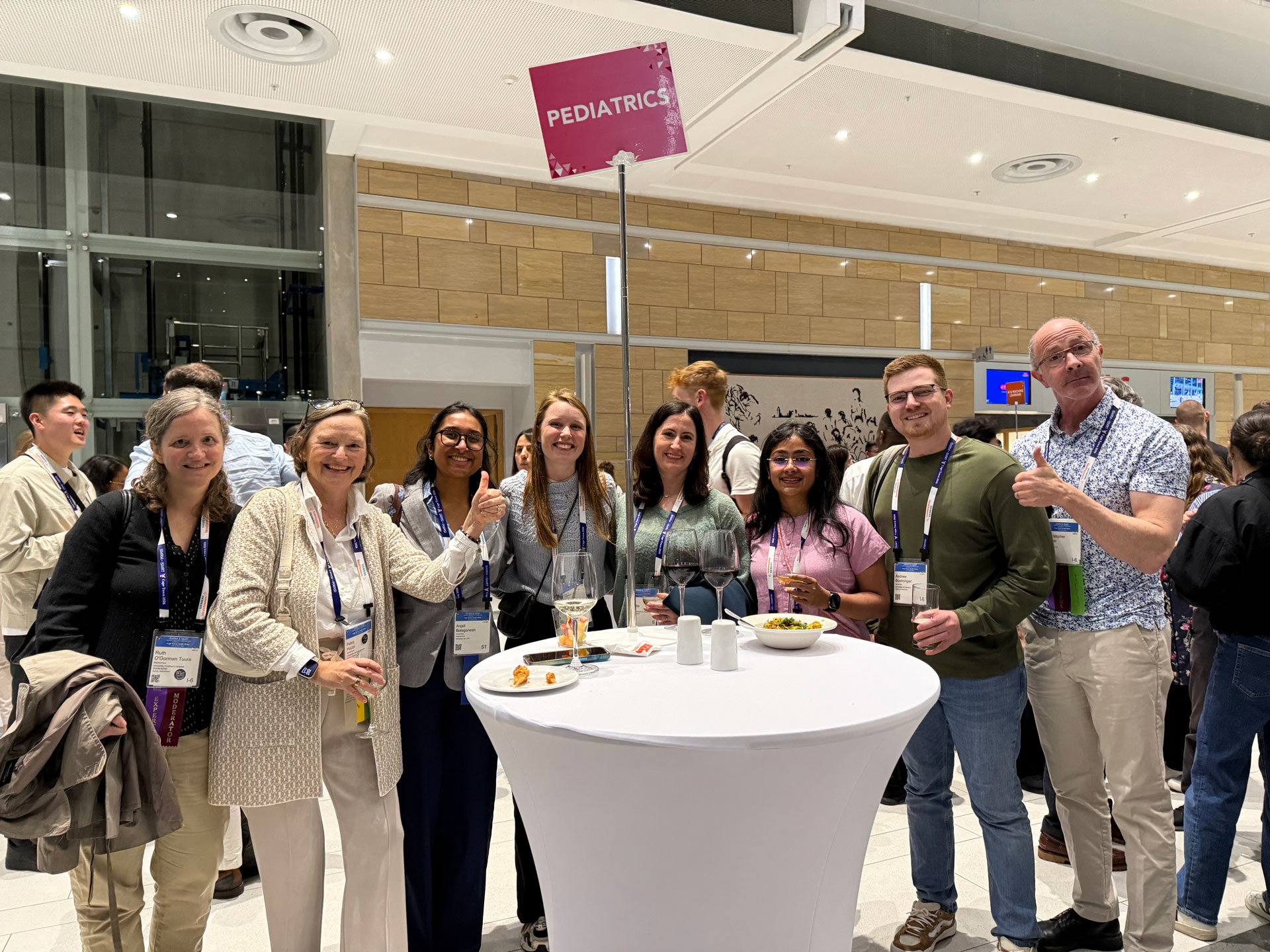 ISMRM is the only global society with a formal Pediatric Study Group, creating a dedicated community for people interested in MRI questions specific to children. Rather than pediatric imaging being an occasional topic within a larger meeting, it is part of an ongoing conversation about how MRI can be optimized and translated into better care for children.
The questions being explored are both technically challenging and clinically important.
How can we obtain high-quality fetal brain images? How can we make neonatal diffusion imaging more reliable? How can we image a child who cannot remain still? Can we reduce or eliminate the need for sedation? How can quantitative MRI and AI provide biomarkers that help us understand development, disease, or treatment response?
At ISMRM, you can explore these questions from multiple perspectives—and often find the people who can help turn a clinical challenge into a technical solution.
Meet the People Behind the Technology
One of the greatest strengths of ISMRM is its multidisciplinary community. Clinicians, physicists, engineers, computer scientists, and researchers come together in the same environment.
This creates conversations that rarely happen in routine clinical settings.
A clinician may describe the need for faster pediatric cardiac flow measurements. An engineer may be developing a new acquisition strategy. A physicist may have a motion-robust sequence. A computer scientist may be working on an AI reconstruction method.
Put these people together, and an idea can quickly become a collaboration.
That is the ISMRM advantage: you don’t just hear about emerging technology—you meet the people developing it.
From Cutting-Edge Methods to Better Care
Pediatric MRI research at ISMRM increasingly focuses on connecting advanced technology with real-world clinical needs.
Several themes are shaping the field:
- The fetal-to-neonatal continuum, linking fetal brain imaging, neonatal quantitative MRI, and longitudinal developmental outcomes;
- Neurodevelopment and brain injury, including connectomics, pediatric fMRI, developmental disorders, and prognostication after neonatal injury;
- Advanced quantitative MRI, including diffusion microstructure, MR spectroscopy, and imaging biomarkers of brain maturation and injury;
- Faster and motion-tolerant imaging, helping make MRI more practical for infants and children and reducing reliance on sedation;
- Pediatric oncology and whole-body MRI, including quantitative approaches to tumor staging and treatment response;
- Cardiac and organ-specific imaging, from pediatric 4D flow MRI to abdominal, thoracic, and musculoskeletal applications;
- AI, reconstruction, and harmonization, with increasing emphasis on explainable methods, multicenter research, and clinical translation; and
- Child-centered safety and workflow, recognizing that a successful MRI examination is not only about image quality, but also about the experience and needs of the child and family.
Together, these areas reflect an important shift in pediatric MRI: from asking what technology can do to asking how technology can make a meaningful difference in the care of children.
A New Opportunity to Collaborate: MD-PhD Tandem Abstracts
For Vancouver 2027, ISMRM is introducing a new MD-PhD Tandem Abstract format designed specifically to encourage collaboration between clinical and technical experts.
A clinician and a technical expert can submit an abstract as dual first authors and jointly present their work. The format follows the same submission and review criteria as conventional abstracts, with accepted submissions eligible for either oral or poster presentation.
For oral presentations, each first author will have five minutes to present.
The concept is simple, but powerful: two perspectives, one project, one shared story.
It recognizes that some of the most exciting advances happen when a clinical problem and a technical opportunity come together.
A Week That Can Change What Comes Next
ISMRM is more than a series of scientific sessions. It is an immersive week of talks, posters, courses, study groups, working meetings, and conversations that continue long after the formal program ends.
You may arrive with a question about a difficult imaging problem and leave with a new protocol, a new collaborator, a new research idea—or perhaps the beginning of a completely new project.
For pediatric clinicians, this is an opportunity to engage directly in the rapidly changing world of MRI while remaining grounded in the questions that matter most: How can we make imaging better for children? How can we make it faster, safer, and more accessible? And how can we turn technological progress into better diagnosis, treatment, and understanding?
The Future of Pediatric MRI Is Collaborative
The future of pediatric MRI will not be shaped by clinicians or technologists working independently. It will be shaped by collaboration—by bringing together clinical insight, engineering creativity, quantitative science, AI, and a deep understanding of the needs of children and their families.
That is what makes ISMRM such an important community for child-health clinicians.
Come to Vancouver. Bring your clinical questions. Bring your ideas. Meet the people who can help build the answers.
Join us at the ISMRM Annual Meeting in Vancouver, BC, Canada, 08–13 May 2027, and be part of a growing global community working to shape the future of MRI for children.
Petra S. Hüppi, M.D.
2026-2027 ISMRM President
Mary-Louise C. Greer, M.B.B.S., FRANZCR
Christopher G. Filippi, M.D.
The Hospital for Sick Children
Toronto, ON, Canada
Chair & Vice-Chair, ISMRM Pediatric Study group
Steven P. Miller, MDCM FRCPC FRSC FCAHS
Professor and Head, Department of Pediatrics
University of British Columbia
Vancouver, BC, Canada